- The Generative Path
- Posts
- Cartesia Sonic, Canvas Tricks & the $1M AI Film
Cartesia Sonic, Canvas Tricks & the $1M AI Film

Hello Friend,
Welcome back to the Generative Path, your weekly infusion of AI-powered creativity curated by ZenRobot to keep you ahead of the curve with the latest tools, trends, and techniques.
The ZenRobot Gen AI Academy is live, and it’s already helping creators turn ideas into real Gen AI projects. If you haven’t explored it yet, now’s a great time to jump in and check it out. Our subscription based hub offers weekly hands-on lessons that show you how to make the mind-bending creative projects you’ve been seeing online, plus a growing library of in-depth video explainers for the tools you’ll need to build them.
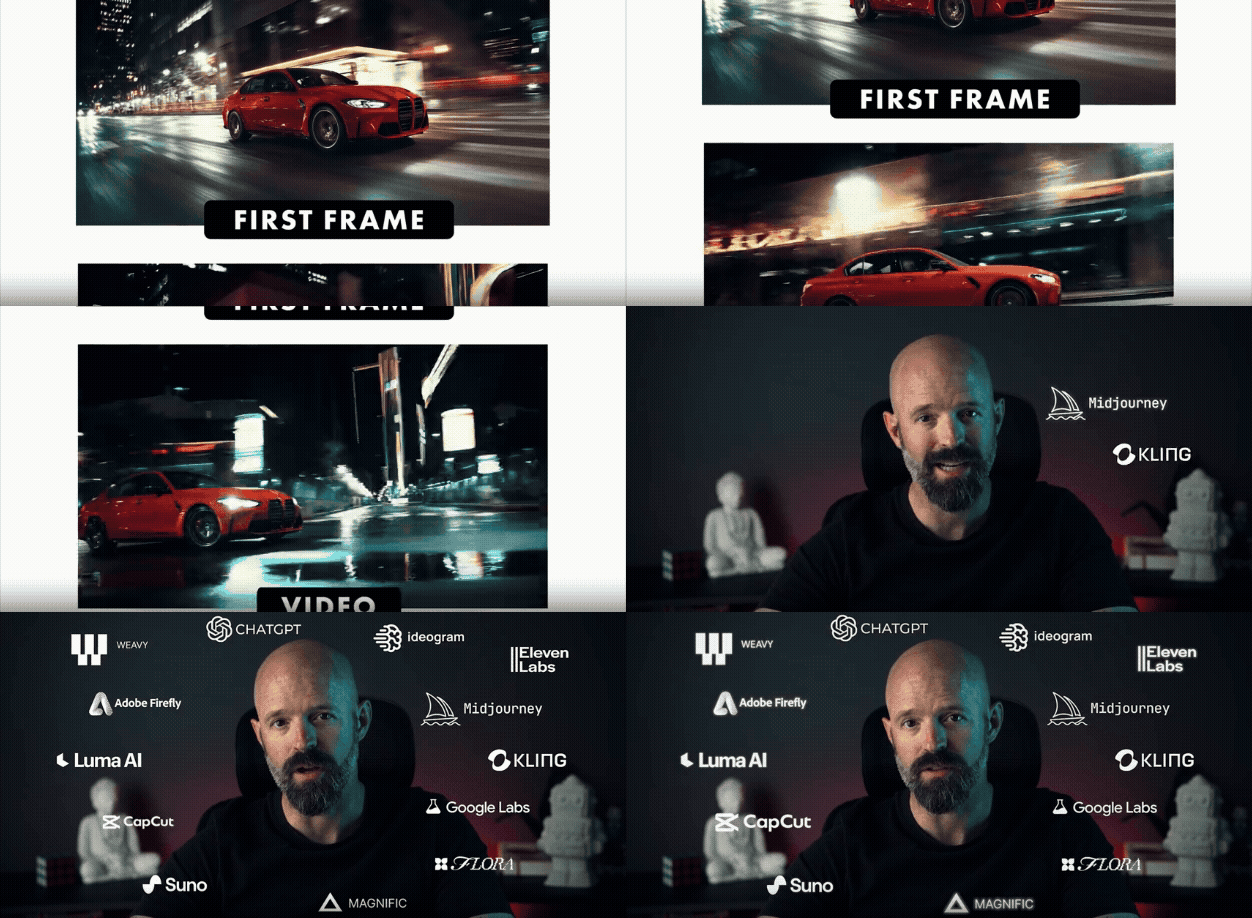
Back to the program… This week, we’re exploring Cartesia Sonic, a tool that lets you sculpt and sequence sound with visual control. We’re also testing ChatGPT Canvas, a fast way to turn your outputs into easily editable text. In the spotlight is Vesica Theissen, whose AI storytelling creates emotionally rich visuals. You’ll find calm focus with Golden Mist Radio, and we’re also looking at the winner of Google’s $1M AI Film Award. Let’s get into it.
Feature of the Week: Cartesia Sonic
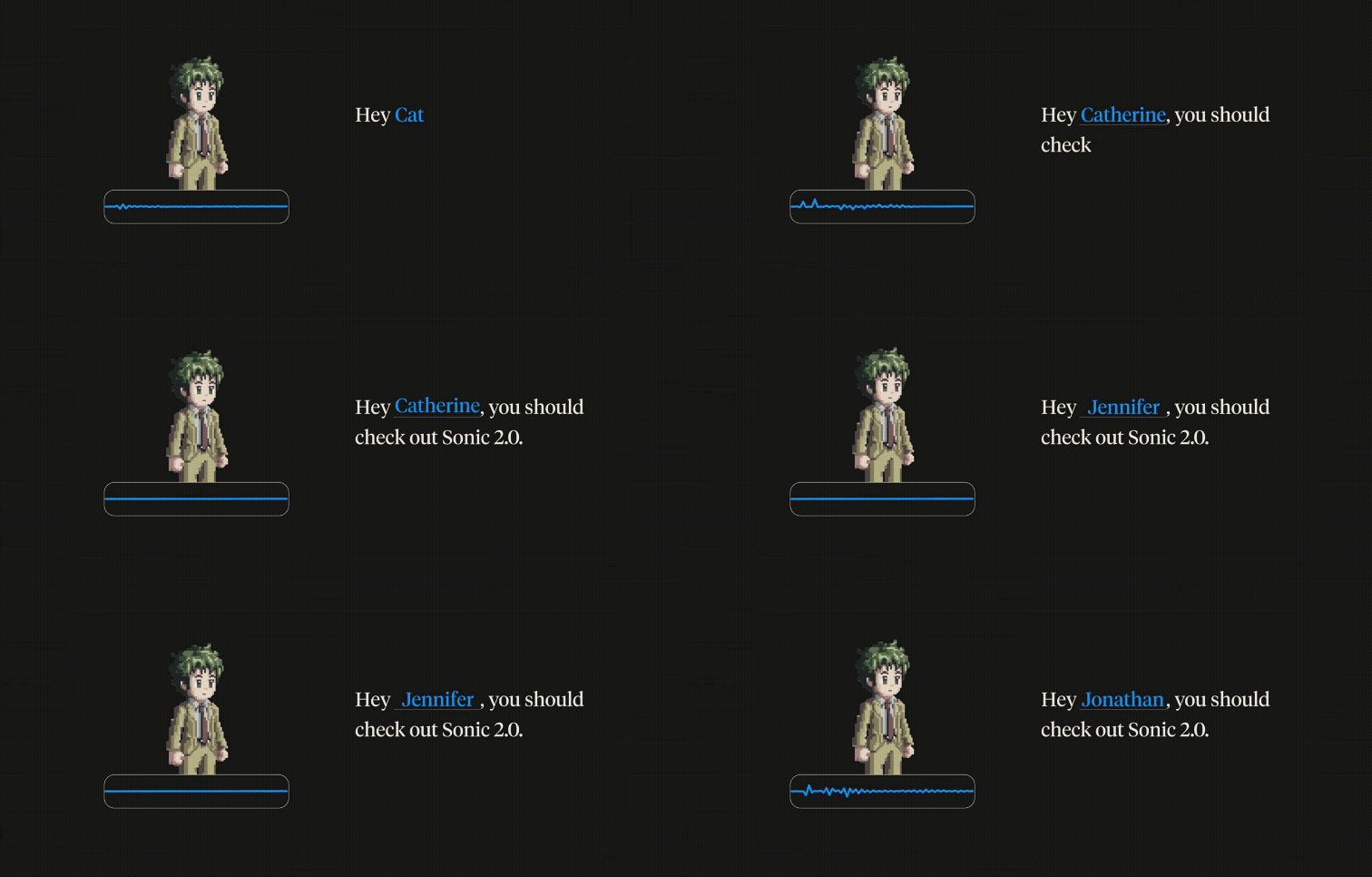
Cartesia is pushing AI voice beyond basic text to speech. Its real strength is ultra low latency, natural prosody, and precise control over how voices sound and respond in real time. This makes it ideal for interactive experiences like AI characters, live assistants, games, and creative audio projects where timing and realism matter.
For creators, Cartesia feels less like a voice generator and more like a performance engine. You can shape tone, pacing, and emotion with impressive nuance, opening the door to dynamic storytelling, conversational agents, and expressive sound design that feels alive rather than pre recorded.
Creative Hack: ChatGPT Canvas
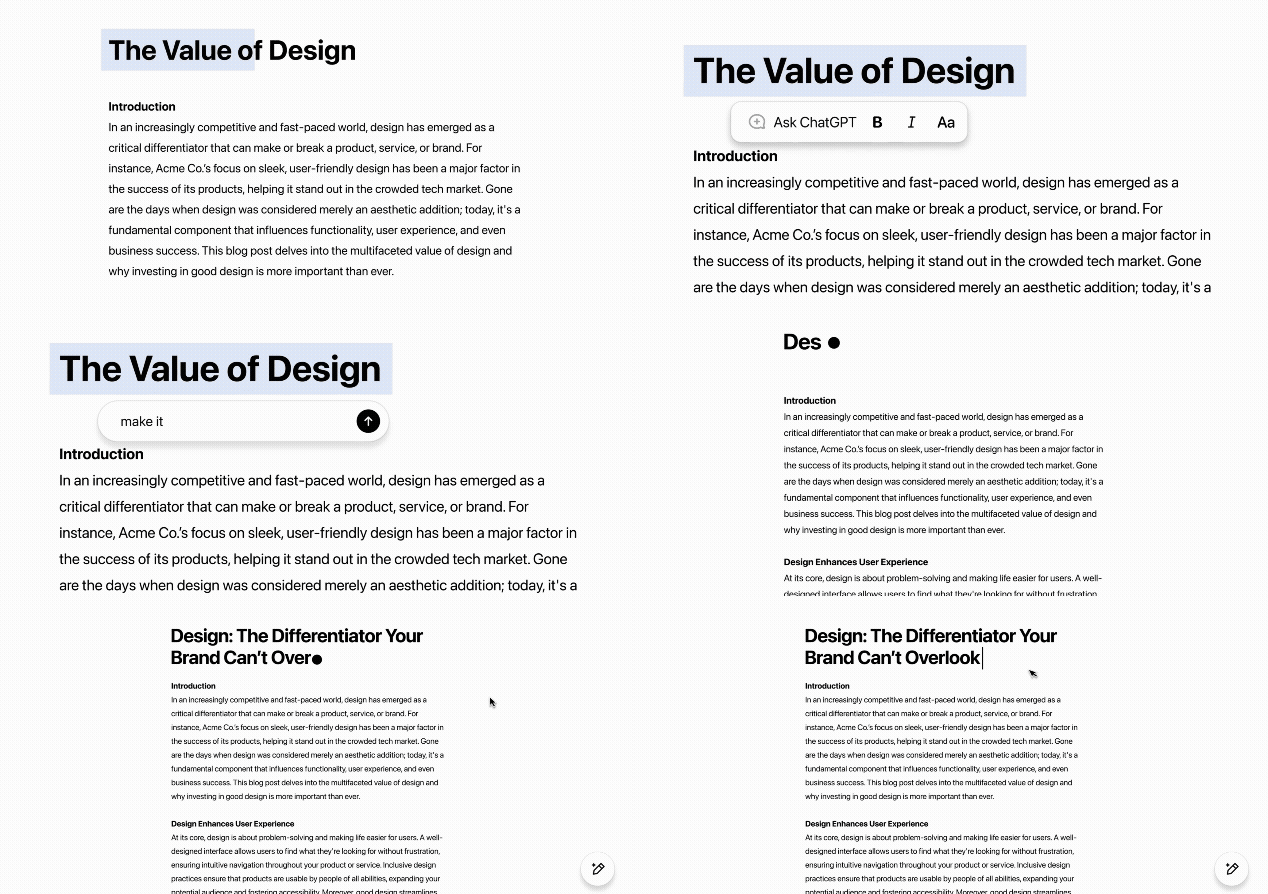
Canvas within ChatGPT turns it into a true creative workspace, not just a chat. To access it, start a longer form conversation in ChatGPT, then write “Open in Canvas” if it doesn’t start automatically. Your content opens in a side-by-side editor where you can work directly on the text.
Once inside Canvas, you edit visually, line by line. Highlight any sentence or paragraph and ask ChatGPT to rewrite it, tighten the language, change tone, expand an idea, or simplify a section. The key difference is context stays intact. You are editing the document itself, not restarting the conversation every time.
The real advantage is iteration speed. Instead of copying prompts back and forth, you refine ideas in place, like working in a shared Google Doc with an always-on collaborator. For writers, designers, and strategists shaping long-form content, prompts, or structured ideas, Canvas keeps momentum high and friction low. Less chatting, more flow.
ChatGPT Canvas
Community Spotlight: Vesica Theissen
Vesica Theissen is an AI visual storyteller who creates experimental films and AI-driven visuals for brands and studios. Her practice draws on fine arts, fashion, theatre, and a PhD in Medical Anthropology, giving her work a thoughtful, culturally aware perspective.
Through her AI Lab on Substack, she explores the intersection of creativity and AI, while her experience as an Ecstatic Dance DJ informs the rhythm and emotional presence of her storytelling. More recently, Vesica is currently doing the Yellow Muse challenge by The Yellow Studio, it’s an AI creative, daily prompts designed to spark inspiration, encourage experimentation, and help artists create consistently without pressure, aiming at building community.
This Week’s Flow State: Golden Mist Radio
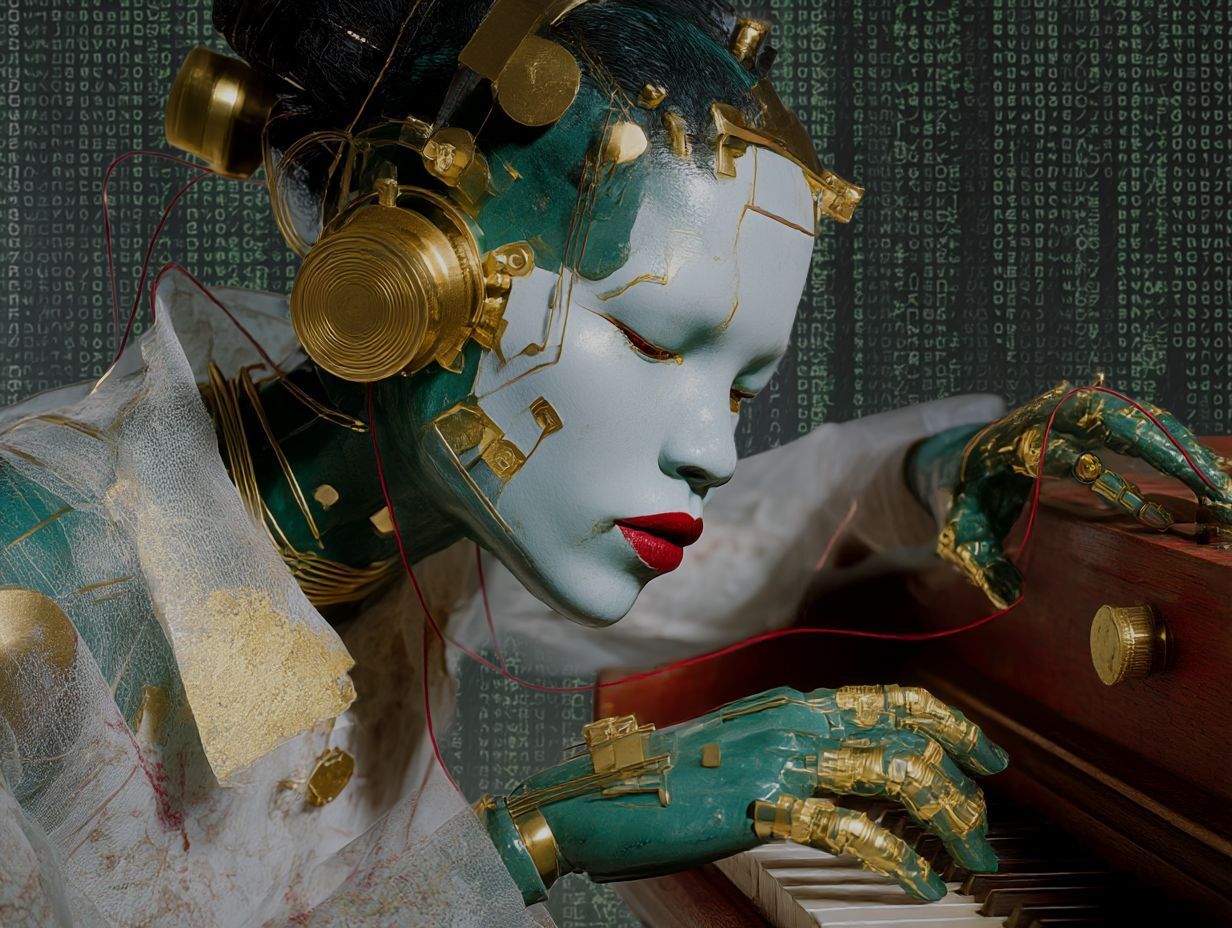
Ease into the warm, dreamy tones of Golden Mist Radio on Spotify. A blend of gentle ambient textures, relaxing electronic layers, and mellow rhythms creates a serene backdrop that’s ideal for focused work, quiet reflection, or just unwinding. It stays subtle and smooth, letting your thoughts flow without distraction. Press play and let the golden mist settle around you.

AI Trend: The Million Dollar Google AI Film Winner
This week, an AI-generated short won the $1,000,000 AI Film Award at the 1 Billion Followers Summit in collaboration with Google Gemini, selected from 3,500 submissions across 116 countries. Created by Zoubeir Jlassi in just one month, the film follows a doll named Lily, a silent witness to the protagonist’s joys, grievances, and moral awakening, highlighting how routine can dull self-awareness and prevent accountability.
Jlassi hopes the film inspires aspiring filmmakers to pursue their ideas without relying on large budgets or expensive equipment, showing how AI can unlock creativity without limits and democratize cinematic storytelling for creators worldwide. Watch Here

AI vs. Reality: Can You Tell the Difference?
This week, we’ve got a brand-new pair of images to test your perception again. Think you can tell which is AI-made and which is the real deal? Take your guess and we’ll reveal the answer in the next issue!


Last week, we kicked off our AI vs. Reality face-off with a shoot, and now for the moment of truth, if you guessed the right one was the real deal, you got it right. The left image was created with Midjourney, one of the leaders in image generation.

Join the Conversation! AI is constantly evolving, unlocking new creative possibilities every day. What caught your attention this week? Hit reply and let us know. We’d love to hear from you.
Follow ZenRobot for more AI insights, and if you found this interesting, share it with someone who would too.
What did you think of today’s email? 🤖 ZenRobot wants to learn from you! |